
Mold Removal & Remediation in Houston, TX
24/7 emergency dispatch, certified moisture inspection, physical containment, and documented microbial remediation across Houston and Harris County. 100% free upfront estimates with insurance-ready scopes.
Active coverage in Montrose, The Heights, River Oaks, West University, Midtown and surrounding Harris County neighborhoods.
Why Houston properties develop mold
Houston sits in a subtropical band where summer dew points routinely stay in the seventies for weeks at a time, and that single fact shapes almost every mold call we take in Harris County. When outdoor air holds that much water and indoor surfaces are cooled to seventy-two degrees, condensation forms on the cold side of wall assemblies, inside supply plenums and along uninsulated duct boots in the attic. Nothing has to leak for mold to start growing — the building only has to be cool enough, long enough, in air that is wet enough.
Then there is rainfall. Houston's flat topography, clay soils and bayou drainage network mean water moves slowly once it arrives. Hurricane Harvey pushed water into tens of thousands of structures that had never taken on water before, and the pattern repeats at smaller scale with every stalled tropical system and every heavy spring squall line. Homes in Meyerland, Kingwood and along Brays and White Oak Bayou often have documented flood histories, and repeat intrusion into the same wall cavity is a very different remediation problem than a one-time supply-line failure.
Local housing stock adds its own patterns. Post-war bungalows in The Heights and Montrose sit on pier-and-beam foundations with vented crawlspaces that trap humid air under the floor deck. Mid-century ranch homes in Spring Branch, Memorial and West University are slab-on-grade, so a slab leak surfaces first as warm flooring, an unexplained water bill and mildew at the base of the drywall. Suburban two-story construction in Katy, Cypress, Sugar Land and Pearland concentrates plumbing on upper floors, which means a failed washer hose or angle stop can wet two ceilings and an entire stair wall before anyone notices. High-rise and mid-rise units in Midtown and the Museum District bring chilled-water lines, shared risers and neighbor-to-neighbor water losses.
Attics deserve their own mention here. Houston attics run brutally hot, radiant barriers are common, and bath fans are frequently terminated into the attic space instead of through the roof. Add a small roof-nail leak and you get the classic dark staining across the north-facing roof deck that homeowners discover only when a real-estate inspection flags it. We treat the sheathing, but the ventilation and termination faults have to be corrected or the growth returns within a season.
Commercial and multifamily work across Houston has its own rhythm. Apartment operators in Westchase and along the Energy Corridor need unit turnovers handled quickly with containment that protects adjacent occupied units. Medical and office tenants near the Texas Medical Center need after-hours phasing. Warehouses and light industrial space along the Ship Channel deal with roof-membrane failures and slab moisture rather than domestic plumbing.
Every Houston project we run follows the same sequence: identify the moisture source, contain the work area, remove or clean affected materials, dry the assembly with monitored logs, and hand over documentation your adjuster can actually use. Correcting the water problem is not an add-on service in this climate — it is the only thing that keeps mold from coming back the following summer.
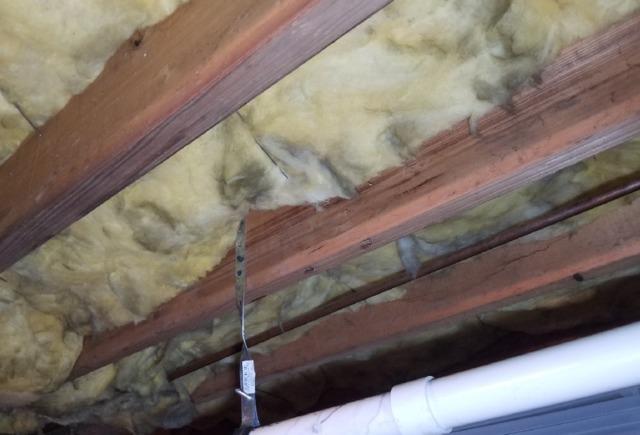
Moisture Mapping & Thermal Imaging
We track humidity gradients and pinpoint wet insulation, slab leaks, masonry efflorescence, or envelope condensation unique to Houston's microclimate in Harris County.
Specialized Capabilities
Remediation Services Available in Houston
Comprehensive environmental containment, fungal sanitization, and structural drying tailored to Houston's architecture.
Source MappingMold Inspection in Houston
Find the moisture source, not just the stain.
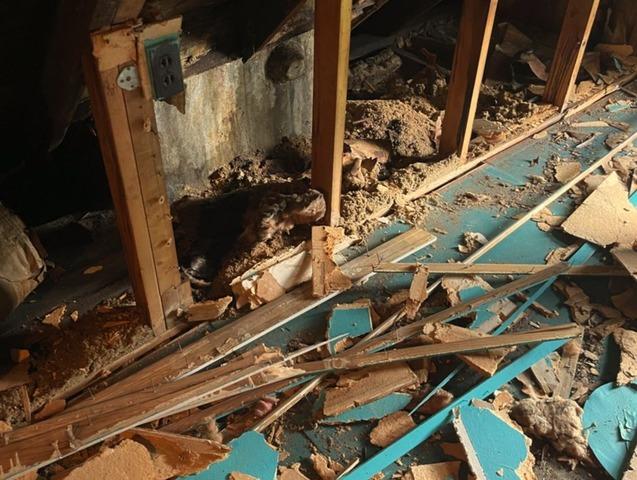 Lab Verified
Mold Testing in Houston
Air and surface sampling when it changes the plan.
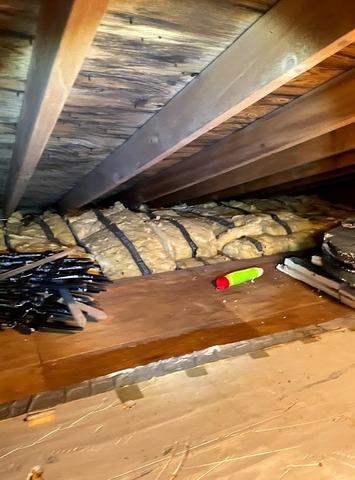 IICRC Standard
Mold Remediation in Houston
Containment, removal, filtration, documentation.
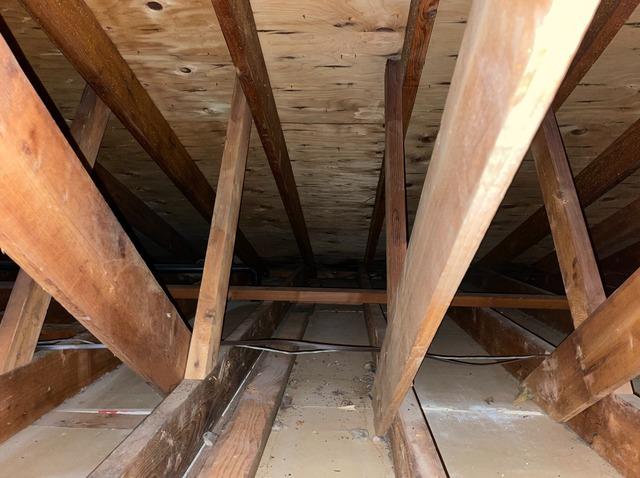 24/7 Rapid Dry
Water Damage Restoration in Houston
Extraction and structural drying before mold starts.
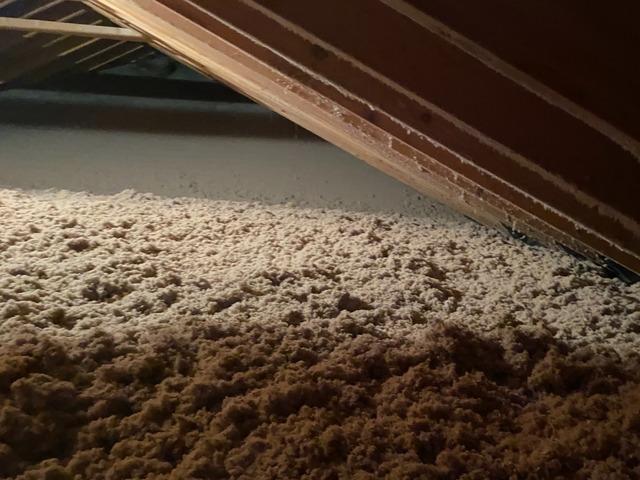 Air & Spores
Indoor Air Quality Testing in Houston
Understand what's circulating through the building.
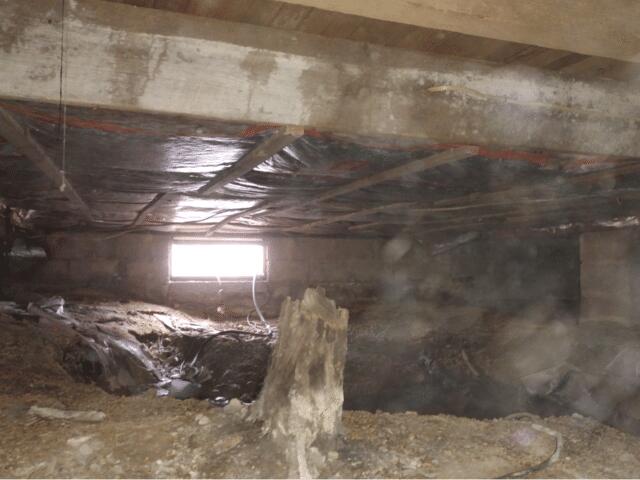 Subfloor & Attic
Attic, Crawlspace & Basement Mold in Houston
The three places moisture hides longest.
7-Step Standard
How a Houston Project Runs
Every project follows the same disciplined standard of care, scaled to the size and urgency of the loss.
 01
01Triage call
When you contact us, we start by understanding the situation—not by making assumptions. We ask what happened, where the problem is located, whether water is still active, and whether the property is occupied. That helps us set the right priority, bring the appropriate equipment, and schedule the next step without unnecessary delay.
 02
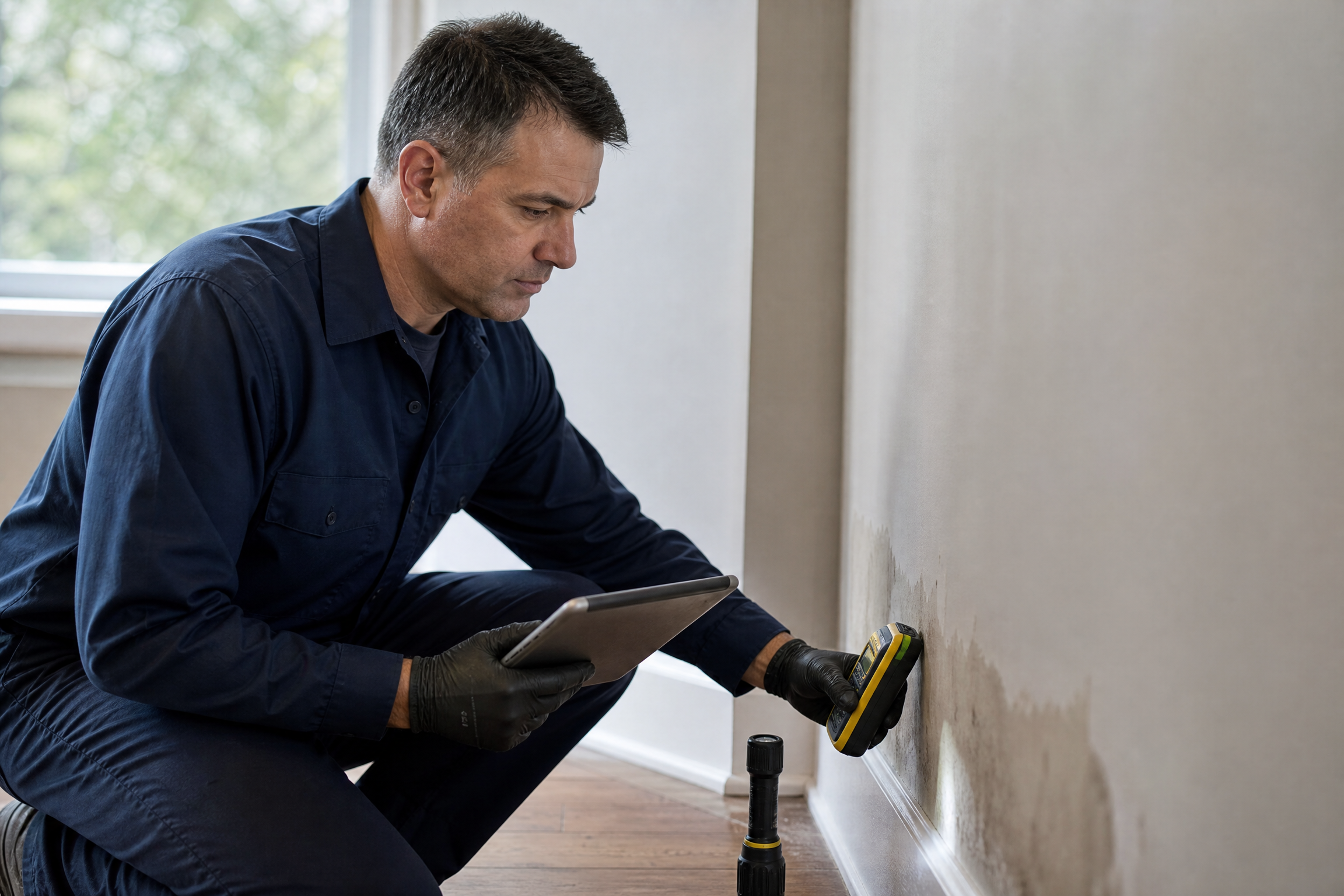
02Inspection and scope
We inspect the affected areas, take moisture readings, document visible conditions, identify impacted materials, and note access constraints. You receive a clear written scope so you can understand what needs attention before work begins.
 03
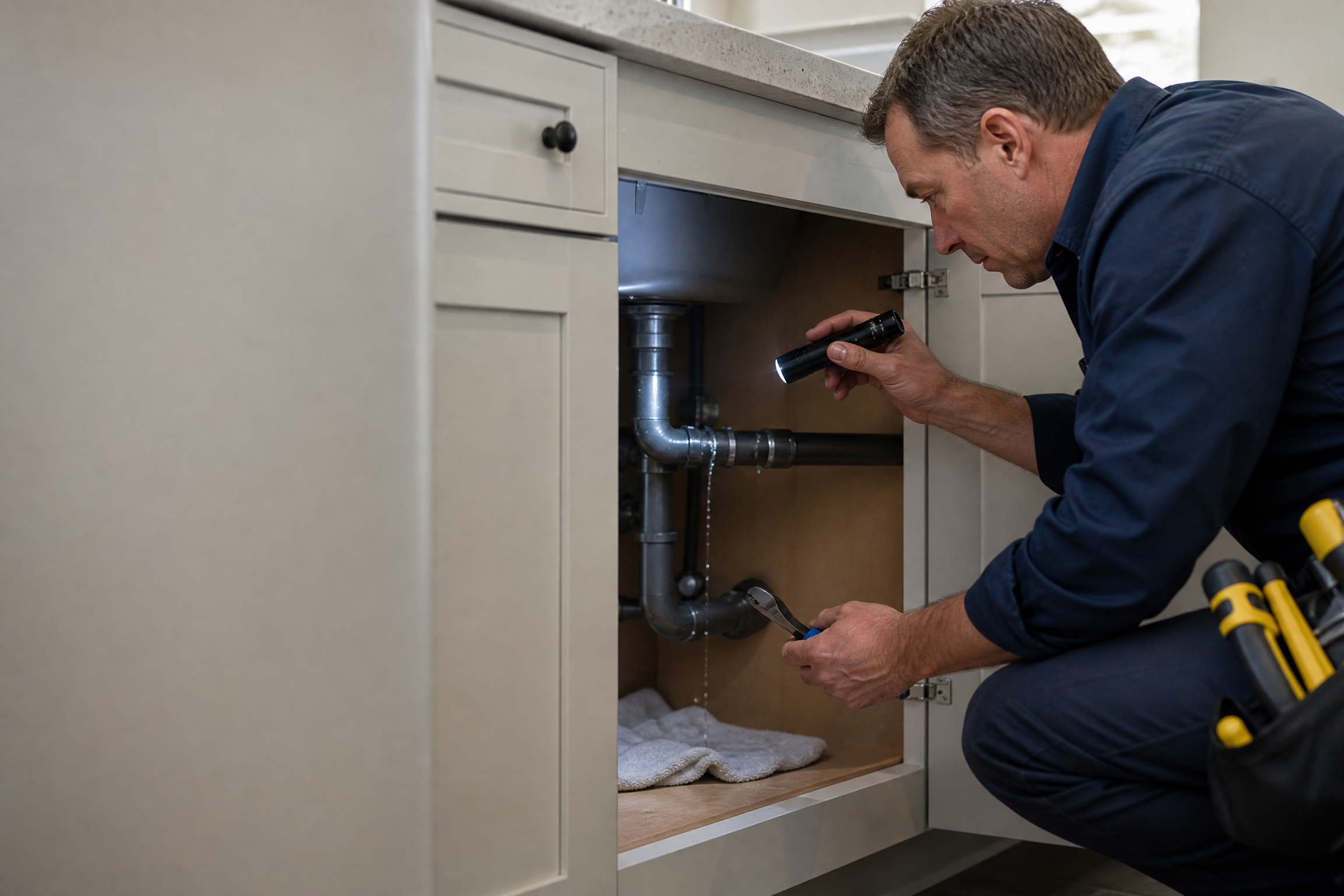
03Source correction
Cleaning up the visible damage is only part of the job. We look for the condition that allowed the problem to happen—such as a plumbing leak, excess humidity, drainage issue, or inadequate ventilation—and coordinate the correction needed to help prevent a repeat loss.
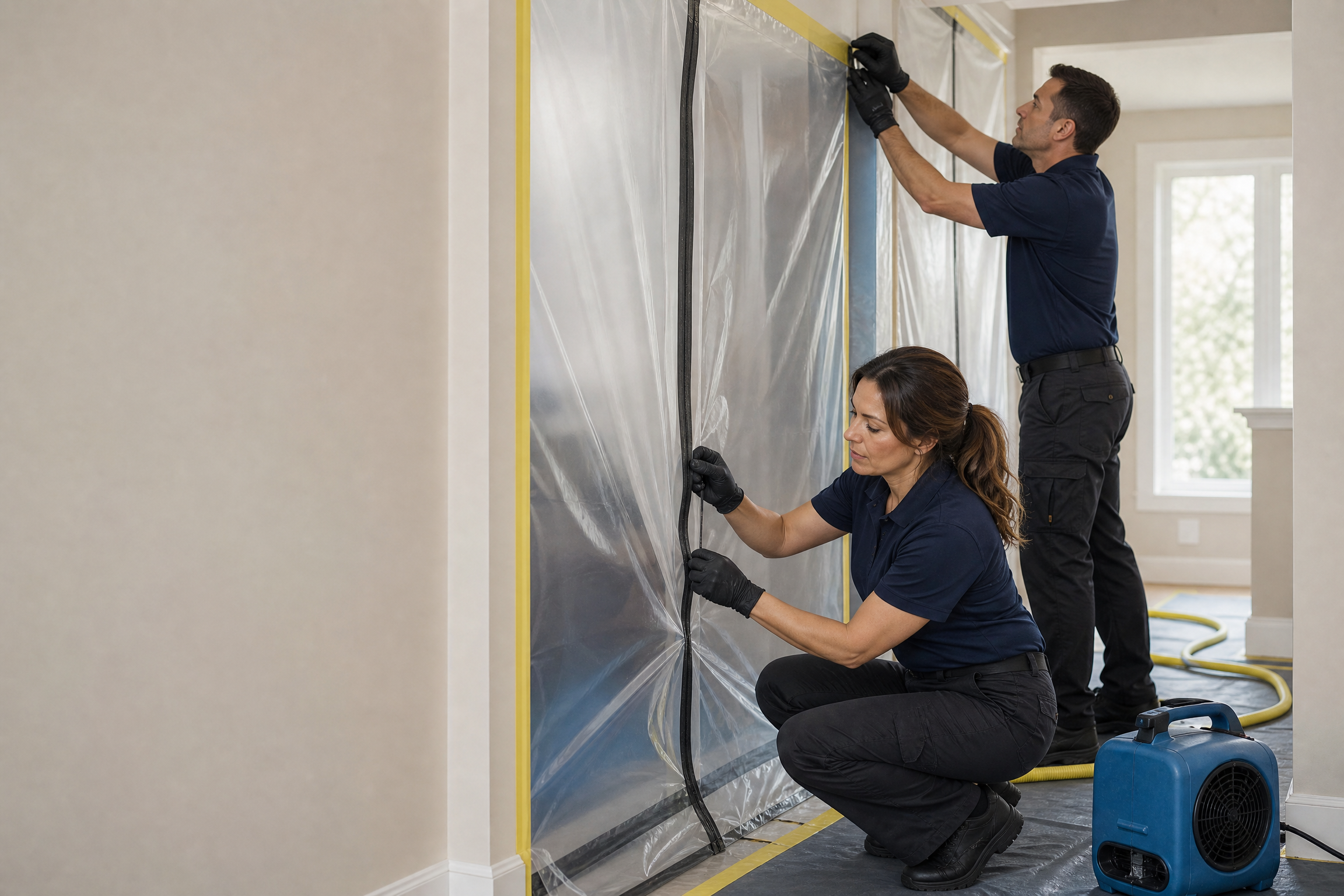 04
04Containment
Before remediation begins, we isolate the work area and protect the rest of the property. Depending on the situation, that may include barriers, air filtration, floor protection, contents protection, and careful separation between affected and unaffected spaces.
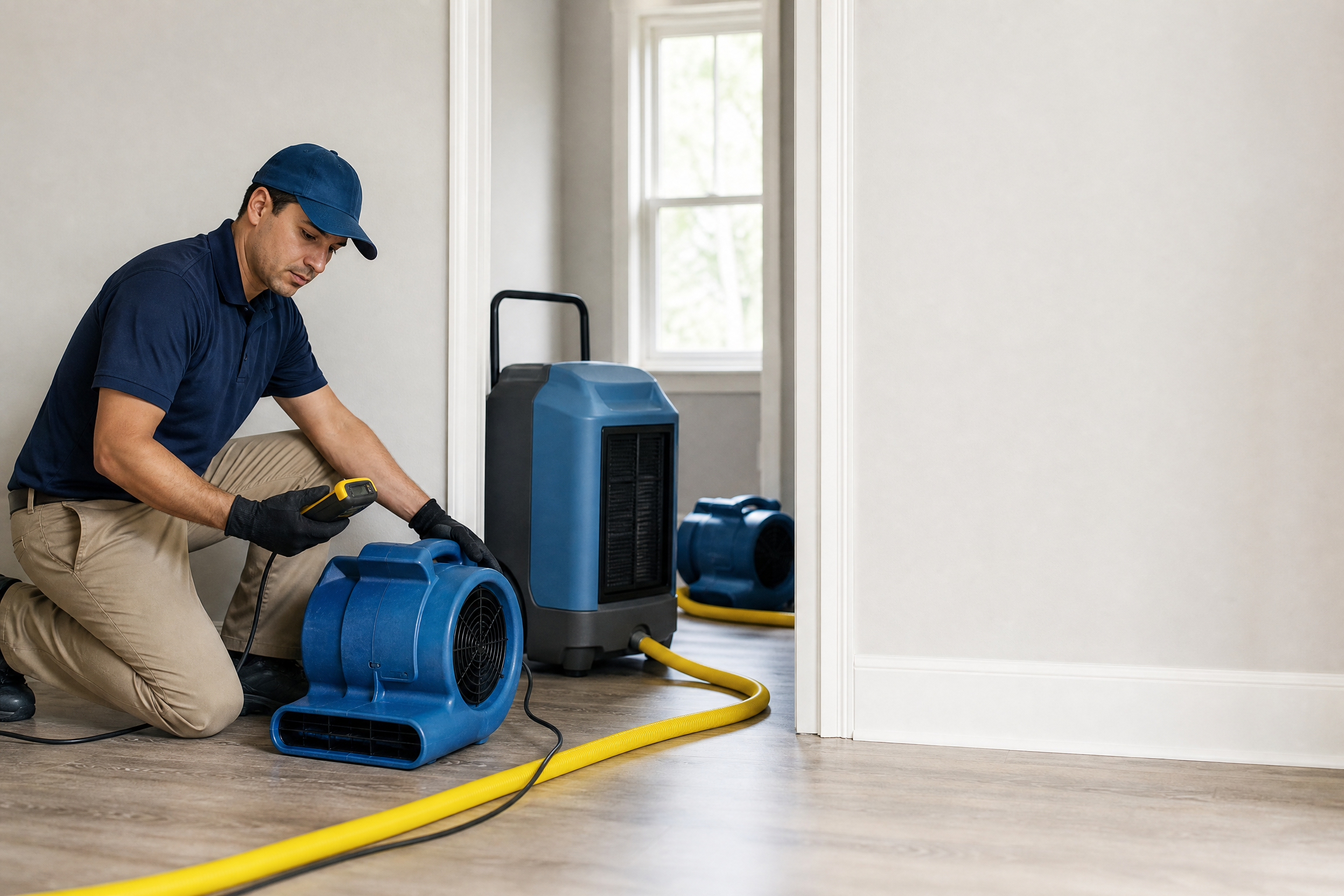 05
05Remediation and drying
Affected materials are cleaned, treated, or removed based on their condition and the project scope. We use professional drying equipment, monitor moisture levels, and HEPA-clean the work area so the space is ready for the next stage.
 06
06Repairs and documentation
Once the affected area is stable, reconstruction is coordinated as needed. We keep the project record organized, including the scope, readings, work completed, and relevant photos, so you have useful documentation for your files or your insurer.
 07
07Closeout
At the end of the project, we review the completed work with you, explain practical prevention steps, and answer remaining questions. When the situation warrants it, we can also arrange independent verification before the project is considered complete.
- IICRC-trained technicians
- Licensed and insured
- Written scope before work begins
- Residential and commercial
- Insurance documentation support
- Nationwide response network
Mold problem in Houston? Get a free quote today.
Request a 100% free, no-obligation estimate. We assess your situation, guide you on immediate precautions, and provide a clear remediation plan.
FAQ
Mold Questions from Houston Property Owners
Why does mold come back so quickly in Houston homes?
Because the regional dew point stays high for months, any assembly that is not dried completely or any moisture source left uncorrected will re-wet. Remediation without source correction — a slab leak, a roof penetration, an unvented bath fan, an oversized AC unit that short-cycles and never dehumidifies — buys you one season at best.
Do you handle flood-damaged homes in Harris County?
Yes. Flood water is treated as contaminated, which changes the scope: porous materials in the wet zone typically come out, the cavity is cleaned and dried, and we document flood height, readings and disposal for your claim and for any local floodplain requirements.
My AC vents have black specks around them. Is that mold?
It is common in Houston and usually indicates condensation at poorly insulated boots or a duct system running below dew point in a humid attic. We assess the HVAC system and duct condition rather than just wiping the registers, since surface cleaning alone will not stop it from recurring.
Do you work with Houston-area insurance adjusters?
We provide photographs, moisture logs, scope notes and itemized invoices in the format adjusters expect, and we speak with them directly when you authorize it. We cannot promise a coverage outcome — that decision belongs to your carrier.
Can you remediate a pier-and-beam crawlspace in The Heights?
Yes, and it is one of our most common inner-loop jobs. Treatment usually pairs with a vapor barrier, drainage or grading correction, and a review of crawlspace ventilation so humid air is not being pulled against cool floor framing.
Which Houston-area suburbs do you serve?
Katy, Sugar Land, Missouri City, Pearland, Friendswood, League City, Pasadena, Baytown, Humble, Kingwood, The Woodlands, Cypress, Spring and Conroe, plus the full inner loop.